|
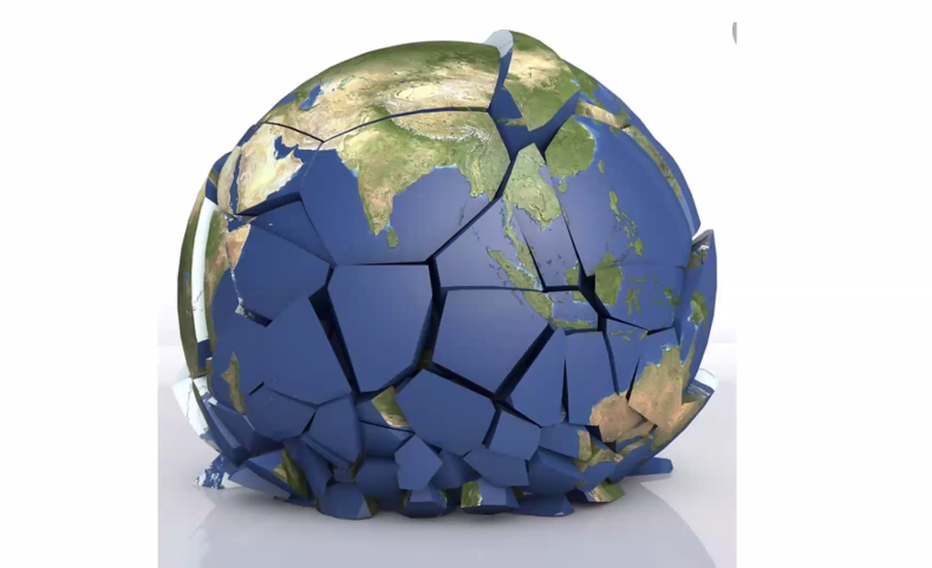
The vast majority of us are worried. The country we are moving into in 2025 is not, will not be the same country we have lived in for decades. Jeremy Lent, in his article, The Political Cataclysm: Causes, Implications, and a Way Forward, has real insight into the why’s of our political predicament, and his exhortations to be kind and love our fellow human beings, of all stripes, is wise and correct, but the flaw that has gotten us into this mess is still being perpetuated. In this time of stress, we are focusing on ourselves. Understandable, we have to take care of ourselves first before we take care of others. That is true for us and our relation to other humans, but in this case, it will be a disaster and only more of the same old, same old.
We have been taken care of for millions and millions of years. The planet is designed to take care of the life that it is composed of, and that includes us. If the planet hadn’t been so successful in doing this, in taking care of us – we would not be here – period. As Robin Wall Kimnerer said, “Even a wounded world is feeding us. Even a wounded world holds us, giving us moments of wonder and joy…” WE have made it difficult for her to do feed, not only us, but the more than human life as well. Our path forward, if we choose to take it is to finally express our appreciation and gratitude by taking care of her! We have only just begun to understand how she has created a world of just the right temperature, a world so full of life, so abundant, that birds filled the sky, and the wind sounded with the rustling of their wings. WE removed that abundance, systematically and relentlessly. We removed that abundance, not so that we could eat, but so others could not, for ‘sport,’ for our ‘convenience.’ Now is the time to work to bring that abundance back. Water is life. While that’s true, it is water in the dirt, in the soil, that is life. Water in the air does us not good, and if it stays up there too long, when it comes down, it comes down in such intense torrents that it does more damage than it brings benefit. Our first act, if we wish to replenish the Earth, is to help water stay in the earth as much as possible. Without water in the soil, we will not have rivers and lakes, but only living soil holds water. Soil will not hold water if it is not full of life already. Science is now saying that two thirds of all life on the planet is in the soil. This would suggest that revitalizing our soils, not only saves life, but helps address the shocking loss of biodiversity we keep ignoring. Water and healthy soil are intertwined, they are interdependent, we can’t have one with the other. The need for food and a cool enough climate to make food possible is a bipartisan issue. It will take all of us to do the work needed to cool the climate by strengthening the natural systems that produce rain, and forests are key to this rain-making process. Because rain needs to stay on the land long enough to sink in, plants are integral to making sure that the soil is porous enough through their root action, to hold water, but the process of photosynthesis creates carbon, and the transevaporation not only moves water back into the air, thus cooling the earth, but they also send up bacteria, Pseudomonas syringae, which allows water molecules to form rain at lower temperatures, and thus rain in more frequent and small amounts. Eurof Uppington, CEO and founder of Amfora, a Switzerland-based importer of virgin olive oils said in a recent article, “No plants, no rain. Water begets water, say hydrologists; soil is the womb, vegetation is the midwife.” This is the point of the “Water for Climate Healing: A New Water Paradigm” paper written for the UN 2023 Water Conference. “Plants are vital in regulating small water cycles and stabilizing local, regional, and global climates.” They recommend two steps; actions we can take to help the planet:
Working with the land to slow and sink water, refreshing the soil with compost, biochar, and biologics, planting forests using the Miyawaki method are all actions that are within the reach of each of us. Not only that, but we will see the results in three short years. Re-greening our planet brings joy to our hearts and water to our rivers. This is doable, but the longer we wait, the more difficult it will be to counteract the warming that is taking place right now. I urge you; I urge everyone to turn to the planet and take action to heal and rebalance it. Fill your mind with thoughts of regenerating life and watch your heartbeat with joy. Knowing that you are working to bring back LIFE, in all its glory, is the very best antidote to despair and anxiety. Watching life come back is real and the perfect antidote to disinformation. Seeing and experiencing the vitality of nature makes the feeling of hope tangible and concrete. Life loves life! YOU are life and you are loved. Nature loves, not in a romantic, tit-for-tat way, but in a way that recognizes the value and importance of every living thing as each entity on the planet contributes to the health and continued success of life on the planet. When we rejoin that merry band, then we will be able to allow ourselves to feel the love that is all around us, we will be worthy.
0 Comments
Leadership – I’m finding that I don’t like that word. It seems to suggest, or the baggage it carries, is that this is someone’s job – to lead. Actually, it is everyone’s one job, to step up and offer their wisdom, in the moment it is needed. The thought that it is someone else’s job, is part of the problem, IMO. What I love about Brian Stout’s article is the range and complexity he is trying to encompass. He calls the visionary leader is one who: instills belonging and connection, someone who uses influence as a motivating force for co-creation, someone who understands that true power is relational, He sees it as “an individual capacity enacted in a collective context,” as a form of relational interdependence. That interdependence means that ‘unlocking gifts’ is a core aspect of this form of leadership, but doing it “in service to the whole.” Brian would say that leaders define the why and then everyone co-creates the path. I was excited when he said, “This is what I think Miki Kashtan was getting at when she observed: The deepest form of human wisdom is mutual influencing.” And influencing, in his view, is about story telling that shapes the problem and suggests an imaginative solution that others can co-create. Then he ties it altogether with accountability, accountability to the whole.
I find this exploration refreshing. After 35 years of thinking about leadership, I stopped looking at people, and instead looked at nature. Gaia is amazing. This about it, nature WORKS, and it is getting better and better at creating life. Life – living things, are becoming more complex, new forms are being created (faster?) as we discover bacteria that eat plastic, oil, nuclear waste, and more. How does this happen? Who’s in charge? Where’s the “leadership?” I’ve come to understand that world-making comes from self-making, there are no ‘leaders’ as we are used to using that term. Let me explain how I see the world, and then I’ll touch on why our current civilization doesn’t seem to work that way, and what we might do about it. What struck me most about Brian’s article is the close relationship between his expression of relational interdependence and autopoiesis, self-making, as described in systems thinking by Fritjof Capra and Maturana and Varela. The wonder, for me, is that the whole world is composed of living things, there is nothing without sentience. By composed, I mean that there is nothing else, nothing, else! Each living thing is responding to the experience of the other living things it encounters. That encounter requires a decision – good for me or bad for me? That choice shapes the response from the others, which informs.. and so it goes. This is exactly what happens in leadership, but often the leaders are unaware, and that unawareness means that there is often a mismatch between with is said and what is done. This is a fatal flaw in leaders. If the mutual influencing is the core of what happens in the world, (and it is), then clearly everything in interdependent. Leaders often fail to truly understand this. Nothing stands on its own, everything responds and is responded to by everything else, and this is one huge stimulation for innovation, AND for the lack of innovation. Context is everything. All actions create the conditions that life responds to, either deciding it is good for me, or it is not good for me, and acting on that decision. A fundamental question for leaders is, are your actions good for your employees? If no, how can you expect your employee’s actions to be good for the company? Of the 16 ‘values’ I’ve identified by talking to scientists, poets, indigenous folks and systems thinkers, at least 10 have to do with the relationship between life forms. LIFE is relational! Humans seem to keep trying to make it transactional, but doing so misses the point that LIFE loves life! It misses the point that LIFE wants to keep life going, to make It better, more creative, more complex, to keep it thriving. Humans seem to be hell bent on making it simpler, more stable, more repetitive, less surprising, less dynamic, and more controlled. Leadership styles follow suit. Traditional leadership, called Command and Control, is certainly in the latter mode. What I hear Brian calling for is leadership that falls in the former, LIFE enhancing mode. For leaders to make this shift, the measure of success that utilizes money will need to shift to a form of evaluation that sees thriving as a measure of success. That means that we will have to open up to the truth held in subjective, even personal evaluation, instead of clinging to the ‘objective’ measure of money that is external to lived experience. This is not a small ask, as leaders will need to trust themselves as well as others. Trust has been rather elusive in the leadership game for decades, as explored by Stephen M.R. Covey in The Speed of Trust. Brian’s focus on relational, interdependence, on influence and unlocking gifts, seems to fit right in with how the rest of the world works. Isn’t it magical to think about all the other life forms in and around us influencing each other and in doing so unlocking the latent gifts each holds that lead to evolution? I get chills just thinking about it. Do the leaders you know get excited about the new and unusual actions employees might be taking as they interact with each other and customers? Or, does that new and unusual behavior make them crazy? How flexible are our organizations? How willing to change and learn? What ever happened to the ‘learning organization?’ We seemed to have slipped back into control in a search for certainty, instead of leaning into the change that true diversity brings. Decades ago, we realized that control and standardization work well in an unchanging world. What we didn’t realize then was how changing the world really is. Given the collapse of so many of our systems given our unwillingness to change, and the pressure that a now very rapidly changing environment is placing on our current business and leadership models, perhaps now is the time to face these changes with open arms and a curious leadership style that will allow for an interdependent approach to be devised between business and the rest of life. We have been seeking to have life conform to business, but shifting that, to have business conform to the needs of LIFE, might just make the sift not only more interesting, but even possible. Trust in such a changing environment requires experience, lots of experience, and deep trust in both oneself, and in LIFE as well. Experience comes with age, but that only happens with self-reflection and an openness to learn, not every older person has these characteristics. Because people learn at different rates and pay attention to different things, only some people will have the discernment to see a path forward in turbulent times. Perhaps if we could see leadership as a job, instead of a character trait, that might lighten the load for those who take it on? This dilemma is not going away, Brian, keep it up! Water, that most magical of substances! It has no shape of its own, yet it is instantly identifiable. It is everywhere life is. We know of no life without water; it is necessary for life to exist and for it to continue to exist. It was a major step in evolution when life discovered how to take water with it, so it could move onto land. Water has memory. The wonderful work of Masaru Emoto (Messages from Water) showing how water changes when infused with spoken words, and the idea of Homeopathy that water can hold the memory of various pathogens are other ways that we recognize that water has memory. Water has three, maybe four forms; liquid, solid, vapor, and the ‘fourth phase,’ sometimes called ‘structured/ describes water's ability to form a layer along water loving (hydrophilic) surface. No other substance has this variety of properties. What IS water? In the work I’ve done on Earth’s Values, and the Global ethic that LIFE uses, I was encouraged by a friend, Ani Ahavah, to look at water through the lens of values. What can water teach us about living the values of nature? Of the sixteen values I distilled from my research the first, and most important is the one first articulated by Jannie Benyus, All actions create the conditions that support life. Now think about water for a moment. Isn’t that all it does? That seems to be what water just does. When water is polluted – it didn’t do that, it is carrying the toxins to remove them, as best it can. When it’s raging, it is often because of our disruption of the balances the rest of life has created for it. Water holds memories of our pain and ugliness to each other, but cheerfully releases them when we re-infuse it with love. I’m feeling a resistance to saying ‘it.’ Water is kin, water is more than kin, water is us. Our language makes it hard to speak of this closeness without generating the distance of separation. Water always has the greater good in mind, so water always manages the health and integrity of the whole, the second principle or value of Earth. Permaculture speaks best to this aspect of water, slow, spread, sink. From a leadership perspective this changes the act of leadership from one of aggressively forcing action to the Confucius approach best capitalized in the paraphrasing of the saying “Effective leadership is achieved when participants say, we did it ourselves.” The slow spreading of understanding seeps into consciousness and becomes, simply, the way we do things. Basic to the understanding of authentic effectiveness is the undercurrent of right-relationship, a third value of nature. Win, win, win is the metric of right-relationship, where all parties are benefited versus the old concept of compromise which suggests shared loss. Where life is concerned, all parties need to be better off for being in relationship, and that sometimes takes patience. There is no contest, but a desire to ensure the long-term benefits which may take time to see, understand and integrate. Patience is a virtue. This also speaks t0 reciprocity and interdependence, two other Earth values as aspects inherent in right-relationship. For me, reciprocity speaks to the heart urge that forms naturally when a benefit is received, as the natural response to balance that gift arises for expression. Water certainly models these as well. An open reception to water is responded to by the gift of life and the giving of that gift requires the reception of that gift as an integral part. I think the welcoming reception is often overlooked and is corrupted by the shift in consciousness of taking. The humbleness of receiving is very different from taking, and that difference is the difference between being in relationship and being interdependent and a top-down control context. It is all in the attitude. That is why reverence is a key aspect of right-relationship. Water is incredibly generous, but at the same time, can be ferocious when denied. The many forms of water speak to water's ability to manage energy economically, without waste. The generation of heat or the removal of heat are all done in ways that balance the climate atmosphere. There is zero waste. The structural changes are done to ensure balance, and disruption through storms and disasters come when that balance has been tampered with. Water's right-relationship with plants and soil ensure the balanced shift in structure, but when soil is killed to become dirt and plant life is replaced with asphalt and concrete and that balance is removed, then the excess energy must be expressed in ways that are often detrimental. This is at the heart of the bionic pump. The bionic pump is a description of the ways in which water finds balance and in which the natural cooling of the Earth takes place. Life needs water, and life – as we know it – needs a certain temperature range, as well. The bionic pump is the way nature and water created to maintain that special temperature range. We humans have tampered with that, and now we are seeing the results. Dynamic stability, another value, is one that water does best. Waters need to shift from fast to slow, from narrow to wide, and from surface to underground all speak to the need for temporary changes without actually changing anything. The expansion of the riverbed prevents flooding. That temporary change must be included in an understanding of ‘normal’ to allow for the needed flexibility. Another way of saying this is that boundaries are not walls or fences, but ranges of acceptance. Working with that range save time, money and aggravation. The range is dictated by the entity needing the expansion, not by some outside entity. This is where respect and trust come in, from a leadership perspective. Listening to what’s needed and not second guessing or overriding are key. Optimization, co-creation and agency are other Earth values that Water can be a model for leadership. Agency has two aspects, directive and responsive. When water takes its own agency, it is such a friend and supporter. It is the life giving support that is at the heart of water’s purpose. When water is being reactive in response to actions by others that are out of water’s control, then we shudder at the power and force of those responses. How often is this true of leadership? When the leader's hand is soft and gentle, then the receptivity of the followers is often spontaneous and seemingly invisible, but when the leader's had is harsh the reactions are often equally dramatic, even when hidden and behind closed doors. The dynamic, interdependent dance between leadership and the rank and file is very often overlooked. Leaderships agency is tightly coupled with the agency of the followers. It is the regenerative leader's job to release the follower's agency by making them leaders in their own right. It is by making everyone a leader that the organization is optimized. Optimization speaks to the health of the whole, and we are back to where we started. Life is not about parts and pieces. Life is about ensuring that the life, through the love of life, continues. Life is about loving life, so keeping, engendering that joy is a key leadership role, one that few understand or accept. Leaders so often get caught up in the achievement thing that they forget about the journey to get there. Life is about the journey, not the result. This is another lesson from water. Waters ‘achievement’ is not getting to the ocean, because that is only one stop on its journey. Water’s achievement is the LIFE it brings forth on its journey from one form to another. This is a regenerative leader's achievement, as well. We are in a crisis beyond imaging. Many have chosen to ignore it. That is one way. Denial and continuing on as if nothing is wrong or even resisting seeing anything wrong in the first place, is one way. This kind of pretense is temporary as it doesn’t stop the collapse from coming, though people will be surprised by it when it becomes impossible to deny. These people will be victims.
Others recognize that collapse is coming, and they are fighting – tooth and nail – to prevent it. These people have picked strategic points, places of leverage where a change could make a difference and they are pushing and fighting to shift that lever. That is the second way. These people are marching, lobbying, writing, and organizing to shift those levers that they see can make a difference. They are warriors. The truth is that nothing has worked. We are toast. Or at least our way of life is toast, so the next questions is, what are we going to do about the end of the world as we know it? Real change is not someone else’s job. Real change starts with us – you & me, becoming different. Some of that difference is easy to see, but most of the iceberg is underwater and invisible, and that’s what must change. Change this deep is a non-linear process. What do I mean by that? Here’s an example: You can stop buying cars, and not buy either gasoline or electric, in an effort to do less damage. That is a linear approach to change. An action is being taken that has a direct impact on the problem and it is clear to see. It is preventing harm, but it is not building a new way. What if instead of wheels we used air, so streets were not needed? Maybe that would begin to bring forth a new world. Non-linear change is change that opens new doors to places we have never been and that we can’t see or predict. Just as being nice to BIPOC folks is a linear change. Dropping any feelings of superiority is a deeper, non-linear change. That shift from helping them to working with them is exactly the shift we need to make as we deal with collapse. We need to move from living on the Earth to living with the Earth. This is the Third Way. We need to shift from the illusion of power over. Even the illusion of helping is often a power over approach, especially when we are the ones with the answer. To achieve success, we need to leave any intention of creating change, and move to discovering the joy in partnership as we co-create together with the Earth. This is not something we can know before hand; it is something that will come into being through relationship. The move from being for, to one of being with is profound. It is a non-linear change. It shifts our energy from resistance to nurturing. WE change as we make change, this is the Third Way. These people are makers, creating a new world as they live. None of us act independently, we act together, we need others to be effective. We listen, we take into account the wisdom and needs of others, and we act accordingly. This is slow change at the beginning, as we learn to know one another. It is predicated on a commitment to relationship – to LIFE – not just the human side of the relationship. It is not human centric – even when humans are involved. It is LIFE centric in every act, no matter who is involved. It requires trust in all the participants – not blind faith. We need to trust the Earth as well as each other. We need to learn to trust ourselves, as well. This is the Third Way. Trust is not easy to come by. It is not only given but created. Trust requires the courage to ask hard questions, hear the answers, and acting accordingly, in ways that nurture the relationship. It is not about winning or losing. Trust is about understanding and knowing, knowledge gain through experience by experiment. Knowledge gained through curiosity and inquiry, learned by asking difficult questions, withholding judgement, and having patience. Nature is the only thing that is truly trustworthy. Every action is designed to support and nurture life. If we want to live, there is no better teacher. In building a mutually nurturing relationship, all parties must thrive – not all at the same time nor in the same way. Judgement changes to discernment as the question of right or wrong changes to life enhancing – or not. Owning the challenges of being able to see clearly require being willing to ask, and ask again, to gain that clarity. Relationship is all about asking/listening – it is all about dialogue. Right relationship works to ensure that all parties in the relationship thrive. How do we learn to listen to each other? How do we listen to the Earth? What is being asked of us? What are we being called to do? In any relationship each party has needs, each party has gifts. The Earth has needs, the Earth has gifts. We have needs and we have gifts. What is the Earth asking of us? Our Earth, what we see all around us, is an expression of LIFE. LIFE loves life! Life is fierce in its commitment to continuing. Earth has been experimenting with how to do that for over 3,900 million years. She’s practiced a lot. Brian Swimm, Thomas Berry, Connie Barlow, Michael Dowd as have so many saints, have been sharing their awe of her wisdom and skill. Fritjof Capra, Andreas Weber, and Robin Wall Kimmerer, among others, have been doing the same. The indigenous voice has only told that story. We are just beginning to listen. We are the youngest species; other life forms have way more experience at it than us. Other life forms keep their agreement with life, the Prime Directive – all actions are to create the conditions that support more life, we do not. I call this listening, gaining Planetary Consciousness. Planetary Consciousness means that the goal of LIFE to thrive, becomes ours. Planetary Consciousness means that we become partners with LIFE, playing the same game by the same rules, becoming giddy as we see LIFE burst out all around us. We have been seeking the answers to Earth’s problems by asking each other. We have refused to ask her, and we have refused to listen – even when she’s yelled at us – as she’s doing now. She is the expert on LIFE – as are so many other life forms on this planet. Life forms that have been here and practicing at living far longer than we have. We are Johnny come lately’s, yet we only listen to our own voice, and we even do that, poorly. Earth’s values are designed for resilience (an intent of Earth’s). Ours have been focused on protection (lack of trust), or on winning (success). Ours are focused on human needs and desires, choosing domination because we don’t trust. Choosing success, defined as bigger and better, over right relationship as we take what we want, using future resources now, and denying their use to other life forms on the planet. In Africa the laying down of roads is destroying migratory patterns and killing wildlife. Our needs appear to be greater than theirs, yet with their death – we die. What is undeniable, is you can’t trust if you are not trustworthy. The indigenous have never understood us – we say one thing and do another, we deny ourselves and blame others, we don’t take responsibility for our own actions. We waste. We know we are fakes, and we cover it up instead of admitting it and changing our ways, so how can we be trusted? We also know this about ourselves, so we don’t trust our own selves. Honesty and self-forgiveness are a big part of the path forward. Everything on this planet is an expression of LIFE. Everything. We acknowledge that when we say, “We are one,” or when we say “God dwells within us a us.” We mean it when we say, “Each of us is a speck of the Divine.” We know the truth! If everything is sacred, because everything has a spark of the Divine, why don’t we treat everything as scared? How can we pollute? Self-deception is one of our biggest challenges. The collusion we all participate in that we are good people, doing our best, allows us to deceive ourselves and perpetuate that illusion, this is another massive challenge we face, preventing us from making the changes we need to make. The gnashing of teeth and wringing of hands will not get us out of this. The answers are here, the Earth is waiting with open arms, if we will just come home. Our resistance to Earth has made us long for home. We believe in the illusion that ‘home’ is out there, somewhere. But HOME is here, right under out feet. Be curious, be courageous, and ask stupid questions, mull things over and become skilled in self-reflection. Earth Values offer insights into the patterns of LIFE. Patterns we can begin to discern, patterns we can nurture and replicate. Patterns we can emulate and curate. What do I mean by Earth Values? They are not wild and crazy, but they are immutable – they cannot be broken. We are where we are because we broke them. Our sense of safety is a thing we call stability. Nature calls stability death. In the real-world everything changes – all of the time. Instead of designing for similarity and stability we need to design for resilience and diversity, two Earth Values. Instead of NO change, we need to embrace dynamic stability where there are ranges to boundaries, instead of barriers, another Earth Value. Take the Prime Directive (an Earth Value), all actions create the conditions that support life. That provides a path that anyone and everyone can walk. How do YOU create conditions for life? What around you is thriving? Your family? Your garden? Your worms, bees and butterflys? Your soil? All of these are in your control. YOU can make a difference in each one of these. Can you get over being concerned about your image and stop making things ‘look good’ and make them actually thrive instead? Can you shift from feeling powerless and useless to noticing the difference you can make? As we shift into managing the integrity of the process of right relationship (an Earth Value), new opportunities will open that we have been too blind to see. We will begin to realize our own gifts and honor our needs as we recognize the gifts of others and honor their needs. This is the future. We will live in gratitude by recognizing that abundance is not about having it all, or having more, it is in having enough. The Earth knows, listen. We have been seduced by the thought that leadership means that the person designated as "leader" does something that makes others what to do something too. A corollary of that is that "others" don't want to do anything and wouldn't, if it wasn't for the "leader." What if that wasn't true? What if, let's just suppose, the "others" really, really wanted to do something. Consider for a moment if you might be an "other," do you want to do something? Do you have dreams and desires? Do you think you just might have solutions to some problems you see everyday? Do you? So, if "others" do have dreams, desires and possible solutions, what role does the "leader" play? What if, "leader" was a job description, much like teacher, or mentor, or janitor? If "leadership" was a job title, what would the job description look like? Humm, maybe a little like teacher, a little like mentor, a little like coach, and a little like trailblazer, and maybe just a little like scout? Maybe the "leaders" job is to evoke from the "others" their innate abilities, dreams and desires? Maybe the "leader" is really a cheerleader with vision? That leads to another seduction. "Leaders" often think that that job title means they can now do whatever they want. They have dreams desires and potential solutions that they really, really want to try out. Good on them! What that usually comes with, however, is the whining about the "others." Stories about how "they" don't understand, how "they" won't follow through, about how "they" don't really care and worries that what they do or want to do won't last. This seduction is most often seen in organizations where the leadership changes about every 4-5 years for top leaders and about every two years for up and coming stars. Michael Watkins surveyed Fortune 500 company HR Directors and found that executives had an average tenure of 4 years; high-potential managers 2 1/2 - 3 years, he quotes Brad Smart as saying that the cost of a failed executive hire was 15 to 24 times base compensation. This is expensive in every way. The constant yanking around that happens as "leaders," who believe this seduction, strive to make their own mark, at the cost of the organizations progress. This becomes a never-ending cycle, one that organizations survive in spite of the turmoil it causes. In some organizations and in many governmental roles tenure is mandated with the belief that change will prevent corruption. This process has become so ingrained that leadership succession is almost mandated in some companies. Organizations that continually rotate leaders select for those that can "get their way" the fastest. The focus on manipulative power, political cunning, and strong will have more to say about the character of the person, than about their ability to serve and build the organization. These two seductions create a lazy approach to leadership. It is way easier to try and get your own way than it is to listen and hear what the collective is saying. History is littered with "leaders," including kings and others, who tried to go against the will of the people and paid dearly. It is much easier to frighten and cajole, manipulate and out smart than it is to erase self-doubt, clarify vision and believe in others even when they don't believe in themselves. We are not taught collaborative techniques to work and play together, we are taught competitive techniques that keep us separate and reinforce the belief that one someone is better than anyone else. Knowing these seductions and being able to address them is critical as we move into regenerative business practices. The pressing need for organizations to be flexible and resilient, the demand for innovation that is off the charts, all call for a leadership that is skilled in evoking the very best from "others." This kind of shift cannot be done by one person - no matter how skilled and forceful. In fact force is the opposite of innovation as it is an expression of fear, not experimentation, trust or curiosity - all components of creativity and innovation. The ability to be collaborative, to evoke the best from others and to create a culture of excited experimentation and innovation are the hallmarks of the new transformative leadership and are the new measures of a leader practicing resilient intelligence. By applying the ‘methods’ nature uses to create thriving ecologies, by acting with each other the same way that the rest of the planet’s life forms interact, by recognizing our interdependence and working to strengthen it, transformational leaders use the dynamics of systems and the Resilient Values Set™ to engage with each other that evoke the best from us. All of us are seeking to contribute, to grow in service to what is important to us. We want to contribute to the grater good and we want to see the results of our labor create a thriving world, not a desiccated desert, yet when we look around that not what we see. Knowing that nature is both regenerative and distributive surely gives us a clue about how we should behave. The world should be better for our presence. Everyone should benefit from what we do, make, create, but that’s not the case. There are just two of the fifteen values from the Resilient Values set™ that can make a huge difference in our lives, if we but lived them: Work to Maintain the Health of the Whole, and All actions Create the Conditions that Support LIFE. Think about these and consider who living just these two would impact your own daily life choices. I’m open for conversation and coaching – contact me anytime: (509) 934-5930 or by email at [email protected] In times of difficulty sometimes things take on new meaning. In my Spiritual Practices class I was struck by a new understanding of hospitality. When things get difficult and scary, when things don’t seem to be going my way the need for hospitality just increases. In times of strife hospitality can be expressed by giving people, (the ‘other’ side), the benefit of the doubt. Nothing can be harder when I cannot imagine how ‘they’ can think that. Nothing can be harder when I know ‘they’ have got it all wrong. Nothing can be harder when I have to wonder ‘how dare they.’ But I’m sure that if I bring curiosity into the situation and wonder, instead of declaring, then perhaps I can be more hospitable to those who seem to think differently. We are all such unique individuals. The process of individuation by which we learn and understand what makes us not only special but valuable to others can get lost in the individualism that sees ‘me’ as the only important being. In truth, the interconnectedness that this time has made so clear, offers up the importance of the uniqueness of each of us that is manifested in the interdependence that makes our lives. Sometimes that very interdependence, that being needed, can be felt as restrictive, because interconnection requires small ‘sacrifices’ of self in order to work together. When that feeling of being restricted prompts people to distance themselves from others instead of reaching out in curiosity, then the circle of interdependence gets broken. Now is the time for me to practice genuine hospitality, to give others the benefit of the doubt. I need to trust they have the same goals even if they approach the situation differently. I need to appreciate being needed and not run from the demands that makes on me. I need to make strengthening that interconnectedness my service. I need to open myself and extend that hospitality to others. |
Details
Kathryn Alexander, MARegenerative approaches require a deep integration with nature. Collaboration requires different structures and ways of working together. If we want different results we have to do things differently! Living regeneratively - living with nature brings forth our spiritual capacities as we act so all life thrives. Categories
All
Archives
December 2025
|


RSS Feed